
Eloralintide
Investigational Long-Acting GLP-1 Receptor Agonist
Eloralintide is an investigational long-acting GLP-1 receptor agonist in the incretin therapy class, engineered for sustained appetite suppression and metabolic regulation. As a ne...

What is this compound?
Eloralintide is an investigational long-acting GLP-1 receptor agonist in the incretin therapy class, engineered for sustained appetite suppression and metabolic regulation. As a next-generation candidate, it is designed to offer extended receptor engagement and prolonged satiety signaling with a favorable pharmacokinetic profile suitable for less frequent dosing.
Sustained GLP-1 receptor activation for prolonged satiety
Designed for extended half-life and reduced dosing frequency
Appetite suppression and caloric intake reduction
Glycemic control via glucose-dependent insulin stimulation
Gastric emptying modulation for extended meal satiety
Potential cardiometabolic benefit profile consistent with GLP-1 class
How it works
Eloralintide mimics endogenous GLP-1, binding GLP-1 receptors on pancreatic beta cells to stimulate glucose-dependent insulin secretion while suppressing glucagon. Central GLP-1 receptor activation in the hypothalamus and brainstem reduces appetite and increases satiety. Structur...
Research imagery
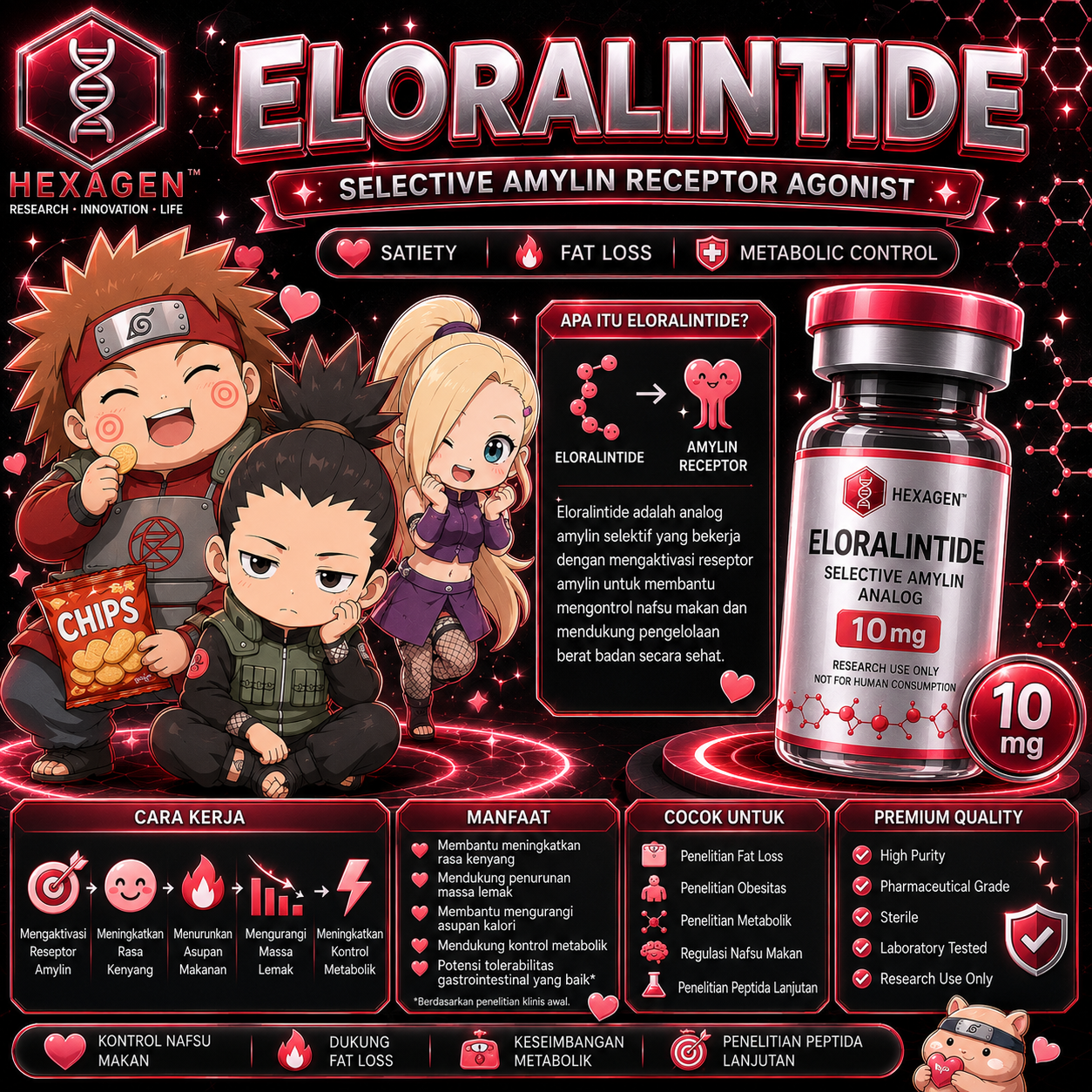
Areas of investigation
Discovery to present
1970s
Discovery
Eloralintide was first identified and characterized in research contexts.
2000s
Research
Preclinical studies expanded across multiple tissue types and disease models.
2010s
Clinical Progress
Early-stage research progressed toward translational and clinical investigation.
2024+
Current Interest
Active research continues with growing scientific interest and expanding publication volume.
Knowledge connections
Explore how Eloralintide connects to mechanisms, research goals, related compounds, and scientific references.
Research calculations
Plan research protocols with precise reconstitution, dosing, and unit conversion tools.
Reconstitution Calculator
Bacteriostatic water ratios
Dose Calculator
Precise microgram dosing
Unit Converter
Syringe unit conversions
Compare with similar compounds


Primary literature
Reference compilation in progress. See research highlights below.
Preclinical pharmacokinetic profiling confirms extended receptor occupancy versus native GLP-1
Preclinical pharmacokinetic profiling confirms extended receptor occupancy versus native GLP-1
Comparative GLP-1 receptor binding studies demonstrate sustained agonist activity
Comparative GLP-1 receptor binding studies demonstrate sustained agonist activity
Animal metabolism models show reduced food intake and body weight consistent with GLP-1 class effects
Animal metabolism models show reduced food intake and body weight consistent with GLP-1 class effects
Eloralintide — Frequently asked
Eloralintide is an investigational long-acting GLP-1 receptor agonist in the incretin therapy class, engineered for sustained appetite suppression and metabolic regulation. As a next-generation candid... Eloralintide belongs to the Weight Loss research category and is studied for its investigational long-acting glp-1 receptor agonist.
Eloralintide mimics endogenous GLP-1, binding GLP-1 receptors on pancreatic beta cells to stimulate glucose-dependent insulin secretion while suppressing glucagon. Central GLP-1 receptor activation in the hypothalamus and brainstem reduces appetite and increases satiety. Structural modifications are designed to resist DPP-4 degradation and extend circulating half-life through albumin-binding conjugation.
Sustained GLP-1 receptor activation for prolonged satiety. Designed for extended half-life and reduced dosing frequency. Appetite suppression and caloric intake reduction. Glycemic control via glucose-dependent insulin stimulation. Gastric emptying modulation for extended meal satiety. Potential cardiometabolic benefit profile consistent with GLP-1 class.
Eloralintide is a research compound in the Weight Loss category. Detailed molecular structure data is being compiled. Refer to primary literature for structural analysis.
Preclinical pharmacokinetic profiling confirms extended receptor occupancy versus native GLP-1 Comparative GLP-1 receptor binding studies demonstrate sustained agonist activity Animal metabolism models show reduced food intake and body weight consistent with GLP-1 class effects These findings are based on preclinical and clinical research. Eloralintide is a research compound and these studies do not constitute medical advice.
No. Eloralintide is not FDA-approved for any indication. It is a research chemical studied in preclinical and early clinical research. These compounds are not approved for human therapeutic use and should only be studied in appropriate research settings.
Eloralintide belongs to the Weight Loss category, which focuses on compounds studied for their roles in metabolic regulation, growth hormone signaling, and targeted adipose tissue reduction. You can explore more compounds in this category on the Weight Loss pillar page.
Add to your cart
Select a variant to add Eloralintide to your cart for comparison, protocol planning, and AI-assisted analysis.
Available Variants
Research Disclaimer
Eloralintide is a research compound. All information is for educational and research purposes only. Not intended for human or animal consumption. Not intended to diagnose, treat, cure, or prevent any disease.